


The Ultimate Guide to Aluminum Polishing: From Mechanical to Chemical Polishing for a Mirror Finish
Date: 2026-02-27 Categories: Blog Views: 529
Excerpt:
Want to make the surface of aluminum alloy as bright as mirror? This article provides an in-depth analysis of the mechanical polishing, chemical polishing and electrolytic polishing processes, and solutions to common defects (such as flow marks), to help you improve the texture of your products.
Aluminum alloys are widely used in consumer electronics, automotive parts, medical devices, aerospace and other fields due to their light weight, high strength and easy processing. However, the surface of aluminum alloy after die-casting or machining often has problems such as mold release agent residue, oxidation layer, and microscopic unevenness, which directly affects the appearance quality of the product and the effect of the subsequent treatment (e.g., anodic oxidation, plating, and spraying).
Polishing is not only a cosmetic procedure to give the surface a mirror-like luster, but also a key pre-process for functional surface treatment. The removal of surface defective layers through polishing can significantly improve the corrosion and wear resistance of aluminum alloys and provide a uniform adhesion base for subsequent coatings. According to the shape of the workpiece, precision requirements and production, the polishing process is mainly divided into three main categories: mechanical polishing, chemical polishing and electrolytic polishing. This article will provide an in-depth analysis of the details of each process, common defects and solutions to help you fully grasp the core knowledge of aluminum alloy polishing.
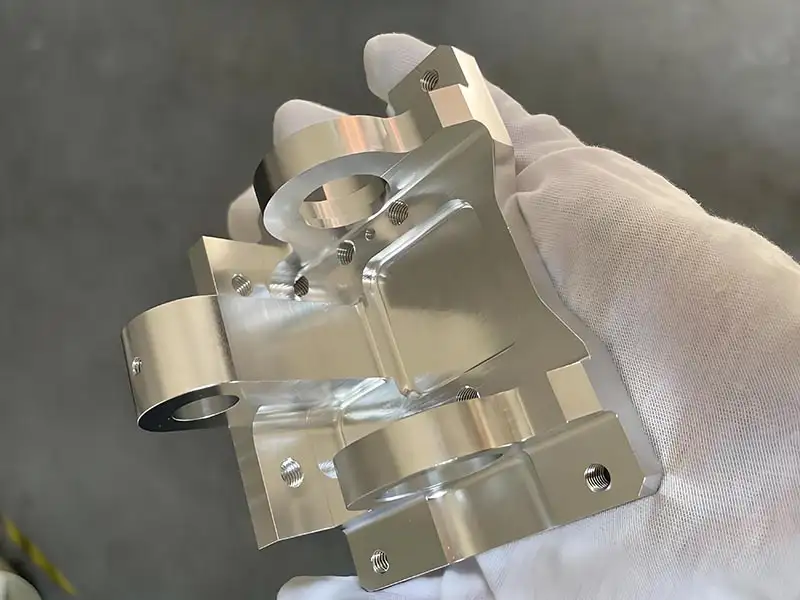
1: Three mainstream aluminum alloy polishing process details
1. Mechanical polishing: a basic but critical process
Mechanical polishing is the most traditional and widely used polishing method, in which the surface roughness is gradually reduced by cutting and tumbling the surface of the workpiece by means of a high-speed rotating polishing wheel with an abrasive (polishing paste/wax).
Process:
- Rough grinding: Use a hard sisal wheel with coarse grain polishing wax to remove burrs, parting lines, and rough turning tool marks.
- Fine grinding: Replace the softer cloth wheel with a medium to fine grit polishing wax to refine the surface texture in preparation for fine polishing.
- Polishing: Use a soft cotton or wool wheel with a fine polishing wax to produce a shine.
- Throw bright (out light): Light pressure at high speeds without abrasive is used to melt and flow the surface using thermoplasticity to form a mirror finish.
Equipment and Consumables Selection:
- Sisal wheel: used for rough grinding, strong cutting force; cloth wheel: used for medium and fine polishing, good elasticity, can fit the surface.
- Polishing wax (polishing soap) selection principle: according to the workpiece material and polishing stage selection of aluminum oxide, chromium oxide or iron oxide wax, the color usually indicates the particle size (such as white wax for rough polishing, green wax for fine polishing, red wax for out of the light).
Technical difficulties:
Aluminum alloy material is soft, low melting point, mechanical polishing is very easy to appear two major problems:
- Deep scratches: Coarse particles from the previous process that are not thoroughly removed can be carried over to the next process and cause deep scratches that are difficult to repair. It is important to strictly enforce “clean transitions” and to clean the workpiece when changing polishing wheels.
- Thermal deformation and risk of fire: Aluminum alloy contains magnesium (especially in the 5 series and 7 series alloy), the high temperature generated by high-speed grinding will cause magnesium powder oxidation and combustion, and in serious cases, trigger a fire. The solutions include: using a flexible polishing wheel to reduce friction heat; controlling the pressure and speed to avoid local overheating; it is best to use theWet polishing(using a polishing solution) or equipped with a dust-removing cooling system.
Automation trends:
At present, CNC mechanical polishing and robot polishing gradually replace manual polishing. New typeFlexible Polishing Wheel(e.g. airbag polishing, belt polishing) to better fit complex surfaces, and built-in cooling channels to dramatically reduce vibration and risk of scratching.
2. Chemical polishing: the first choice for complex shaped workpieces
Chemical polishing is a method of leveling and brightening workpieces by immersing them in a specific chemical solution, which is suitable for batch processing of workpieces with complex shapes that are difficult to reach mechanically (e.g., precision die-castings, internal cavities).
Brief description of the principle:
Using the selective dissolution of acid (or alkali) on the surface of aluminum alloys, the microscopic bumps are preferentially dissolved due to high chemical activity, and the depressions are dissolved more slowly, thus gradually leveling the surface.
The classic triple acid system:
Industry commonly used phosphoric acid (H?PO?), sulfuric acid (H?SO?), nitric acid (HNO?) mixed solution, in which phosphoric acid plays a major role in the dissolution of the nitric acid to inhibit pitting and brightening effect. Typical ratios are phosphoric acid:sulfuric acid:nitric acid=70:20:10 (v/v), temperature 90-115°C, time tens of seconds to several minutes.
Process condition control:
- Temperature: Below 90 ℃ reaction is slow, leveling effect is poor; higher than 115 ℃ reaction is intense, easy to produce excessive corrosion, and nitric acid decomposition accelerated, need to be supplemented in time.
- Time: It needs to be precisely controlled according to the alloy composition and the initial surface condition, and pitting will occur if it is too long.
- Stirring: Slight stirring or oscillation of the workpiece prevents localized overheating and gas stagnation (stagnant gas tends to form spots).
Common pain point: How do “flow marks” or “zebra stripes” form?
This is the most common defect after chemical polishing, manifested as white or dark streaks on the surface of the workpiece, seriously affecting the yield.
- Reason: After the workpiece is removed from the high-temperature polishing tank and transferred to the water washing tank, the liquid film adhering to the surface continues to react and the water evaporates, resulting in salts such as aluminum sulfate being deposited on the surface. These deposits are difficult to clean once dry and form flow marks.
- Solution:
- Reduced transfer time: The time from exiting the tank to entering the water wash is controlled to less than 3 seconds.
- Add corrosion/fog inhibitor: Adding special additives to the polishing solution can inhibit the too rapid decomposition of nitric acid, while extending the permissible residence time of the liquid film.
- Optimization of tank fluid ratios: Appropriately increasing the proportion of phosphoric acid and decreasing the proportion of sulfuric acid can reduce the tendency of aluminum sulfate generation.
3. Electrolytic polishing: the guarantee of high-end mirror effect
Electrolytic polishing (also known as electrochemical polishing) is the process of leveling and brightening the surface by using the workpiece as an anode, energizing it in a specific electrolyte, and using anodic dissolution to preferentially dissolve the microscopic surface bumps. It is the ultimate means of obtaining stress-free, ultra-smooth surfaces, and is commonly used in high-end fields such as medical devices, optical components, and molds.
Principle:
During the electrolysis process, a viscous film of high resistance is formed on the surface of the workpiece (composed of dissolution products and electrolyte). The film is thin and current density is high at the microscopic bumps and dissolves quickly; the film is thick and current density is low at the depressions and dissolves slowly, thus realizing selective leveling.
Comparison of effects:
Electrolytic polishing has the following advantages over mechanical polishing:
- No mechanical scratches and deformation layer, high surface cleanliness, up to mirror level reflectivity.
- No residual stresses are generated, making it suitable for parts with high fatigue life requirements.
- It can handle thin-walled, fine filaments and other easily deformed workpieces.
2: Polishing common defects and quality control
Streaming“ or ”splotches“ on the surface after polishing?
In-depth analysis of causes:
In addition to the issue of transfer time, the stability of the bath is critical. Long-term use of chemical polishing solution, aluminum ions will continue to accumulate (usually controlled at 15-35g / L), more than the permissible range will reduce the brightness of polishing and induced flow marks. In addition, if the workpiece is designed with blind holes and deep grooves, the solution brought out is difficult to be washed quickly, and it is also the hardest hit by flow marks.
Solution:
- Regularly test and adjust the tank fluid composition, replenish new acid or partially replace the old fluid.
- For complex workpieces, ultrasonic cleaning can be added after chemical polishing to ensure that the solution in the blind holes is thoroughly displaced.
- Use specialized chemical polishing additives, which improve leveling speed and increase resistance to flow marks.
Safety during polishing: How to avoid fires?
Reason: Aluminum alloys (especially magnesium-containing 5-series and 6-series alloys) produce high-temperature microscopic chips during mechanical polishing, which have a very high specific surface area and are highly combustible when exposed to air. If a large amount of aluminum and magnesium dust accumulates in the dust pipe, it will cause deflagration once it encounters a spark.
Response:
- A wet polisher is used to carry away heat and dust with a stream of water.
- Dry polishing must be equipped with a highly efficient explosion-proof dust removal system, and the pipes must be cleaned regularly.
- The speed of the polishing wheel should not be too high, and the pressure should be uniform to avoid local overheating.
- Open flames are strictly prohibited at the operation site, and fire extinguishing equipment (Class D extinguishers for metal fires) is provided.
Precautions for polishing before anodizing
Many aluminum alloy workpieces need to be anodized after polishing to obtain a colored or protective oxide film. At this time, the quality of polishing directly affects the oxidation effect:
- If mechanical polishing leaves deep scratches, they will be more visible when oxidized.
- If the chemical polishing residual salts are not washed, the oxide film will have white spots, chalking or color difference.
- If the polishing temperature is too high resulting in changes in the crystalline phase of the material surface, orange peel or uneven reflection may occur after oxidation.
Therefore, it is recommended to add a post-polishingAsh removal / light treatment(e.g. soaking in dilute nitric acid solution), thoroughly remove the surface residues, and then transfer to the anodic oxidation process.
Contact Us】Professional Aluminum Die Casting and Polishing Solutions
After learning so much about the details of mechanical and chemical polishing, are you looking for a partner who can precisely control the details of these processes? High-quality polishing is not only about brightening the surface, but also about ensuring that subsequent processes such as anodizing are carried out perfectly. As a specialized manufacturer in the industryNingbo Hexin Die Casting FactoryWe have rich experience in aluminum alloy die-casting and surface treatment. We understand every step from die-casting to polishing to surface treatment, and we can provide customized polishing solutions according to the characteristics of your products, effectively avoiding common problems such as flow marks and color differences, ensuring that your products have excellent surface texture and market competitiveness.
3: Guidelines for the selection of polishing processes
Selection of process according to product requirements
| Type of requirement | Recommended Processes | dominance | limitations |
|---|---|---|---|
| Pursuing high efficiency, low cost and high volume | chemically polished | Complex shapes can be handled with high efficiency | Environmental pressure, slightly lower brightness than electrolytic polishing |
| Pursuit of the ultimate mirror effect | Mechanical polishing + electrolytic polishing | Stress-free surfaces with very high reflectivity | High cost, not suitable for large pieces |
| Automated mass production | Automatic mechanical polishing (with cooling) | Good consistency, no risk of scratches | Large investment in equipment, need to address heat dissipation |
Differences in polishing of different aluminum alloys
- Pure aluminum (Series 1) and low-alloyed aluminum (Series 3, 5): Chemical polishing is the most effective and it is easy to obtain high brightness.
- Silicon-containing aluminum alloys (4-series, ADC12 and other die-cast aluminum): Since silicon is insoluble in acids, the surface may be grayed after polishing, and it is usually necessary to work with mechanical polishing to remove the silicon rich phase from the surface layer, or to use a special chemical polishing solution (containing fluoride).
- High magnesium aluminum alloy (5083, etc.)High magnesium content, mechanical polishing need to be particularly vigilant about the risk of fire; chemical polishing is prone to uneven oxide film, the need to adjust the ratio of acid solution.
FAQ (Frequently Asked Questions)
Q: Is aluminum polishing and brushing the same process?
Answer: It's not.burnishIt is to obtain a smooth, mirror-like surface and to reduce roughness; andwire drawingIn order to form a specific pattern on the surface (such as straight grain, messy grain), presenting a satin texture, the two pursuit of the visual effect is completely different, the processing principle is also different (brushing using abrasive belts / brush rollers directional grinding).
Q: How do “flow marks” occur on the surface after chemical polishing?
Answer: This is usually due to the fact that the workpiece is removed from the polishing solution to enter the water rinse tank of theExcessive transfer timeResult. The liquid film adhering to the surface continues to react and the water evaporates, causing aluminum sulfate to deposit on the surface and form streaks. Shortening the transfer time, optimizing the tank liquid formulation, and using additives are the main preventive measures.
Q: Can aluminum alloy be anodized directly after polishing?
Answer: Yes, but it is necessary to ensure that the surface is clean and free of heat distortion layers. After polishing, the workpiece must be thoroughly cleaned to remove any residual polishing solution or wax, and if necessary, alkaline etched or acid washed out. If the polishing temperature is not properly controlled resulting in changes in the crystalline phase, color differences may occur after anodizing.
Q: Why does my aluminum alloy blacken or catch fire when mechanically polished?
Answer: The main reason for this is thatLocalized high temperaturesThe magnesium in aluminum alloys is powdery and reacts easily with air. The magnesium element in aluminum alloys is in powder form at high temperatures and reacts very easily with air. It is recommended to reduce the sanding pressure, increase the speed or use special polishing wheels with greater heat dissipation capacity, and to ensure that the dust extraction system operates effectively.
Q: What industries use aluminum polishing?
Answer: Applications are wide-ranging and include: consumer electronics (cell phone cases, laptop housings), automotive parts (trim strips, wheel hubs), medical devices (surgical tools that require easy cleaning), home appliances (refrigerators, washing machine exterior parts), bathroom hardware, reflectors for lamps, and certain optical components in the aerospace industry.
reach a verdict
Aluminum alloy polishing is a technology-intensive surface treatment process, which concerns both the first impression of the product (aesthetic appearance) and directly affects the subsequent coating and end-use performance. From traditional mechanical polishing to highly efficient chemical polishing to high-end electrolytic polishing, each method has its unique advantages and applicable scenarios. In the face of common problems such as flow marks, color difference, fire, etc., only a deep understanding of the process mechanism and strict control of the parameters can stabilize the ideal mirror effect.
If you are struggling with the polishing quality of your aluminum alloy products, or need professional support in post die-casting polishing and anodizing pre-treatment, please feel free to contact us at Ningbo Hexin Die Casting Factory With our extensive experience, we will provide you with complete solutions from die casting to surface treatment, helping your products to stand out in the market.