


ZL106 (Al-Si8Cu1Mg) High Strength Casting Aluminum Alloy Comprehensive Guide: Composition System, Heat Treatment Optimization and Selection Comparison
Date: 2026-03-02 Categories: Blog Views: 110
As a Chinese national standard (GB/T 1173) in theAluminum-silicon-copper-magnesium high-strength casting aluminum alloyThe quintessential representative of theZL106 (ZAlSi8Cu1Mg) by means ofGood casting properties, excellent heat treatment strengthening effect and balanced overall mechanical propertiesis known for. The alloy passesSilicon (Si), copper (Cu), magnesium (Mg) multicomposite reinforcementWhile maintaining good casting fluidity, the T6 heat treatment provides a significant increase in strength and hardness, which is a key factor in the manufacture ofHigh-quality castings for medium loads, complex structures and work at higher temperaturesIt is the ideal material for a wide range of applications in the fields of general machinery, automobiles and power equipment.
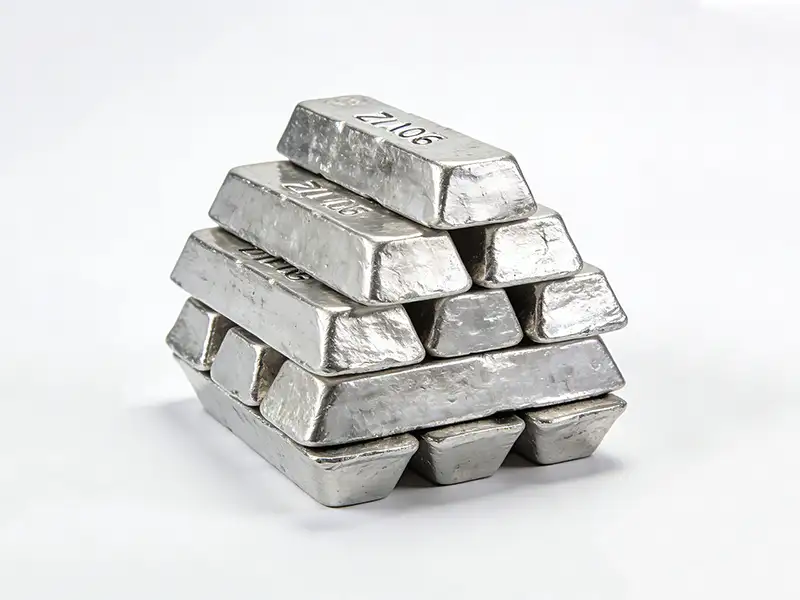
The national grade for ZL106 is ZAlSi8Cu1Mg.
- National Standard Grade: According to GB/T 1173, its grade isZAlSi8Cu1Mg. The name directly reflects its core alloy system: silicon (Si), copper (Cu), and magnesium (Mg).
- Industry/Enterprise Code:ZL106?It is a widely used code for this material in foundry industry drawings, manuals and enterprise standards.
- Core features:Medium silicon content (7.5-8.51 TP3T)?Good castability is guaranteed;Copper (0.8-1.2%) in combination with magnesium (0.3-0.5%)This makes it possible to haveExplicit heat treatment enhancement capabilitiesIt can be used in cast, T5 or T6 condition with a wide range of adjustable performance.
ZL106 Aluminum Alloy Composition Table
| elemental | Content range (wt%) | functional role |
|---|---|---|
| Silicon (Si) | 7.5-8.5 | Main alloying elements. Provides good casting fluidity, resistance to hot cracking, and partial solid solution strengthening. |
| Copper (Cu) | 0.8-1.2 | Primary Strengthening Element. Formation of Al?Cu reinforced phases significantly improves room and high temperature strength and hardness. |
| Magnesium (Mg) | 0.3-0.5 | Key Enhancement Elements. Formation of Mg?Si phase with Si, which synergizes with Al?Cu to provide composite strengthening. |
| Iron (Fe) | ≤ 0.5 | impurity element. Strict control is required to avoid the formation of brittle phases and the reduction of mechanical properties. |
| Manganese (Mn) | 0.2-0.5 | Neutralizes the harmful effects of iron to form harmless or beneficial compounds. |
| Zinc (Zn) | ≤ 0.2 | Impurity elements. |
| Titanium (Ti) | 0.1-0.2 (can be added) | Grain refiner. |
| Aluminum (Al) | tolerance (i.e. allowed error) | Substrate material. |
ZL106 Physical and Mechanical Properties Parameter Table (metal mold casting, typical values)
| Performance indicators | Cast (F) | T5 aging state | T6 solid solution + aging state | Performance Positioning and Interpretation |
|---|---|---|---|---|
| intensity | 2.71-2.73 g/cm3 | -- | -- | -- |
| Tensile strength (Rm) | 180-210 MPa | 220-260 MPa | 260-310 MPa | Excellent strength in T6 stateIt reaches the level of medium to high strength cast aluminum. |
| Yield strength (Rp0.2) | 100-120 MPa | 150-180 MPa | 200-240 MPa | The yield strength is significantly increased after heat treatment and the load carrying capacity is enhanced. |
| Elongation (A) | 3.0-5.0% | 2.0-4.0% | 1.5-3.0% | Good plasticity in cast stateAfter T6, the strength is increased but the plasticity is decreased. |
| Brinell hardness (HB) | 60-70 | 80-90 | 90-110 | The hardness is increased dramatically after T6, with good abrasion resistance. |
| High Temperature Strength (200°C) | general | favorable | talented | The addition of copper keeps the high temperature properties better. |
| Casting mobility | favorable | -- | -- | The medium silicon content ensures that the mold filling capacity is superior to that of high copper, low silicon alloys. |
| corrosion resistance | moderate | moderate | moderate | The copper content makes them less resistant to corrosion than copper-free alloys and requires surface protection. |
Performance Enhancement Paths and Process Adaptation
The best feature of the ZL106 is itsDesignability of performance and process flexibility:
- Multiple composite reinforcement: Silicon provides castability, copper provides high-temperature strength, and magnesium contributes the precipitation strengthening effect. The synergistic effect of the three elements results in mechanical properties superior to those of alloys with a single strengthening system (e.g., pure Al-Si or Al-Cu alloys).
- Flexible heat treatment system:
- T5 (artificial aging): For applications requiring high dimensional stability and minimizing the risk of deformation, the strength can be increased by 10-20% from the as-cast state.
- T6 (solid solution + full artificial aging): Peak strength is obtained and is suitable for load-bearing structural components, but the risk of deformation that may be caused by solution hardening needs to be borne in mind.
- Wide adaptability of casting process: Applicable toSand casting, metal casting, investment castingIt is a highly versatile material for a variety of processes, such as...
Corresponding international grades
ZL106 has a number of close international equivalents, but it is important to be aware of minor differences in composition:
- Chinese national standard:ZAlSi8Cu1Mg?(GB/T 1173)
- American Standard:: In conjunction with the?A319.0?(Al-Si6Cu4) and?A332.0?close in system, but A319 has a higher copper content, and ZL106 is typically better in toughness; with the?356.0?(Al-Si7Mg) compared to ZL106, which contains copper and has better high-temperature performance but less corrosion resistance.
- EU standard:EN AC-45400?(Al-Si8Cu3) is close in silicon content but significantly higher in copper than ZL106;EN AC-42000?(Al-Si7Mg) No copper, different performance system.
- Japanese Standard:: In conjunction with the?AC4B?There is overlap in some component ranges.
Comparative analysis of ZL106 with ZL101A and ZL104
In the GB/T 1173 standard system, ZL101A, ZL104 and ZL106 are three of the most widely usedHeat treatableCasting aluminum alloy. Correct understanding of the differences between the three is the key to achieving accurate selection.
| comparison dimension | ZL101A (ZAlSi7MgA) | ZL104 (ZAlSi9Mg) | ZL106 (ZAlSi8Cu1Mg) |
|---|---|---|---|
| Alloy System | Al-Si-Mg system | Al-Si-Mg system | Al-Si-Cu-Mg system |
| Silicon (Si) content | 6.5-7.5% | 8.5-10.5% | 7.5-8.5% |
| Copper (Cu) content | ≤0.1%(no copper) | ≤0.1%(no copper) | 0.8-1.2%(containing copper) |
| Magnesium (Mg) content | 0.25-0.45% | 0.17-0.35% | 0.3-0.5% |
| Limit value for impurity iron (Fe) | ≤0.20% (very severe) | ≤0.60% (loose) | ≤0.50% (medium) |
| Tensile strength (T6) | 290-320 MPa | 240-270 MPa | 260-310 MPa |
| Yield strength (T6) | 200-230 MPa | 180-210 MPa | 200-240 MPa |
| Elongation (T6) | 3.0-5.0%(Optimal) | 1.5-3.0% | 1.5-3.0% |
| Hardness (T6) | 80-90 HB | 70-85 HB | 90-110 HB(maximum) |
| High Temperature Strength | general | favorable | talented(with copper advantage) |
| corrosion resistance | talented(no copper) | favorable | Medium (with copper) |
| Casting mobility | favorable | talented(high silica) | favorable |
| Typical Costs | High (strict purity requirements) | lower (one's head) | moderate |
| Core Advantages | High toughness + high corrosion resistance | Castability + Economy | High temperature strength + hardness |
| Ideal applications | Aerospace, high-end equipment | General-purpose housings, high-volume parts | Power parts, medium heat load parts |
Selection Quick Guide:
- Select ZL101A : When the part requiresHighest toughness, excellent corrosion resistanceand when the budget is sufficient (e.g., aerospace mounts, ship components).
- Select ZL104: When pursuingCasting manufacturability and cost balanceWhen the strength requirements are moderate (e.g., general-purpose shells, high-volume parts).
- Select ZL106: When the working temperature of the part is high (>150°C) or for theHardness, wear resistanceWhen there are higher requirements (e.g. engine accessories, pump bodies).
Application of ZL106 in foundry industry
based on itsGood castability, high strength and cost balancefeatures, ZL106 is mainly used in the following fields:
- Power plant and engine components (mainstream applications)
- Engine Accessories: Intake tube, timing gear housing cover, engine mount, water pump housing.
- powertrain: Small engine blocks, cylinder heads (non-high heat load areas), transmission cases.
- Compressor components: Crankcase, cylinder head.
- General mechanical equipment
- Pump and valve housings: Medium-sized water pumps, oil pumps, hydraulic valve bodies (high operating temperature or pressure resistance requirements).
- transmission part: Reducer housing, clutch housing, pulley.
- Motor Casing: High-power motor housings, generator end caps.
- Auto Parts
- Chassis & Suspension: Control arm bracket, steering knuckle housing (after T6 treatment).
- braking system: Brake air chamber housing, bracket.
- Industrial equipment
- Textile machinery parts, printing press cylinder supports, food machinery housings.
ZL106 Aluminum Alloy Frequently Asked Questions
Q1: What is the main difference between ZL106 and ZL104? How to choose?
- This is the most common selection comparison:
- ZL106:Containing copper (Cu 0.8-1.2%), with Al?Cu as one of the main strengthening phases.Better high-temperature performance and higher hardnessLibyan Arab JamahiriyaSlightly lower corrosion resistanceThe elongation is slightly lower.
- ZL104 :Copper free (Cu ≤0.1%), with Mg?Si as the main strengthening phase.Better corrosion resistance, slightly better toughnessThe high-temperature strength is not as good as ZL106.
- selection: Higher operating temperatures (>150°C) or forHardness and wear resistanceRequires high selectionZL106Yes.Corrosion resistance and toughnessHighly demanding, moderate operating temperature selectionZL104.
Q2: What are the general heat treatment parameters for ZL106?
- Typical T6 process parameters (for reference only, need to be adjusted according to specific castings):
- solid solution treatment: 510-520°C × 6-10 hours.Warm water (60-80°C) quenching.
- artificial time limit: 160-180°C × 6-10 hours, air-cooled.
- Note: The solid solution temperature should not be too high to prevent the copper phase from overburning. The cooling rate has a large influence on the performance.
Q3: How does the casting performance of ZL106 compare to ZL102 or ZL104?
- Good castability, but not top notch:
- Better than ZL102?cloggedThe fluidity of ZL102 (Silicon 12%) is much better than that of ZL106.
- Better than ZL104?close but not quiteThe flowability of ZL104 (Si9%) is slightly better than that of ZL106.
- localization: For ZL106Medium silicon content in exchange for higher strength after heat treatmentThe castability is sufficient for most complex structural parts, but caution is needed when designing ultra-thin-walled parts.
Q4: What is the welding repair performance of ZL106?
- general. Due to its copper content, the tendency to weld hot cracking is slightly higher than that of ZL104 without copper. Argon arc welding filler welding needs to bepreheating(150-200°C) and with appropriate filler material, post-weld forstress reliefThe following are some examples of the types of welds that should be used. For important load-bearing parts, large patch welding should be avoided as much as possible.
Q5:What is the application prospect of ZL106 in automotive industry?
- good outlook. With the lightweighting of automobiles and the miniaturization of powertrain and high power density, the casting of aluminum alloys for theHigh-temperature strength and comprehensive mechanical propertiesZL106, as a medium copper-containing alloy with a significant strengthening effect, is used in theEngine peripheral parts, hybrid system housing, electric drive unit housingand other fields have wide application space. It is inOne of the preferred materials for performance upgrades at a manageable cost.